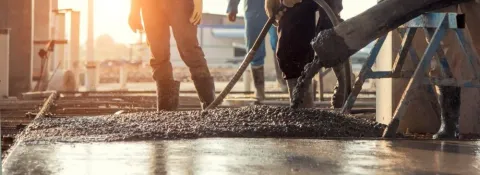
From initial planning to final delivery, our team ensures a seamless procurement process, offering high-quality cement that meets international standards (EN 197-1). The chemical composition and physical-mechanical properties of each cement are available in its data sheet.
Our Portland Cements
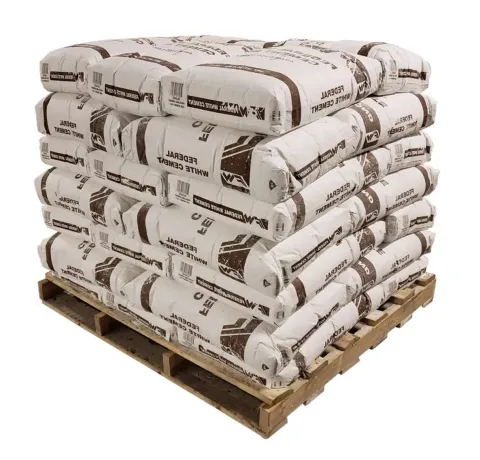
Portland Cement CPA 55 - CEM I 52.5 N
- Composition
- Composed primarily of calcium silicates (C₃S, C₂S) for high mechanical strength.
- High content of calcium oxide (CaO) for rapid hydration and setting.
- Low content of magnesium oxide (MgO) and alkalis to improve long-term durability.
- Packaging
- 50 kg bags · 1,000 kg big bags · Bulk
- Minimum order quantity
- 12,500 MT
- Main uses for our customers
- Port & Marine Engineering: docks, harbors and coastal projects.
- Dams & Hydroelectric Plants: water management and renewable energy infrastructure.
Portland Cement CEM II/A-L 42.5 R
- Composition
- Contains 80–94% Portland clinker, with 6–20% limestone (CaCO₃).
- The limestone content improves paste rheology and helps reduce the CO₂ footprint.
- High calcium silicate (C₃S, C₂S) content supports rapid strength development.
- Packaging
- 50 kg bags · 1,000 kg big bags · Bulk
- Minimum order quantity
- 12,500 MT
- Main uses for our customers
- Government & Public Infrastructure: roads, bridges, tunnels and railways.
- Commercial Construction: skyscrapers, business hubs and complexes.
- Port & Marine Engineering: docks, harbors and coastal projects.
- Dams & Hydroelectric Plants: water management and renewable energy infrastructure.
Portland Cement CEM I 42.5 N-LH/SR5
- Composition
- Low C₃A (< 3.5%) content ensures high sulfate resistance (SR5).
- High levels of CaO support stable and long-lasting hydration.
- Very low levels of MgO, alkalis and chlorides for increased durability.
- Packaging
- 50 kg bags · 1,000 kg big bags · Bulk
- Minimum order quantity
- 12,500 MT
- Main uses for our customers
- Government & Public Infrastructure: roads, bridges, tunnels and railways.
- Commercial Construction: skyscrapers, business hubs and complexes.
- Port & Marine Engineering: docks, harbors and coastal projects.
- Dams & Hydroelectric Plants: water management and renewable energy infrastructure.
Portland Cement CPJ 45 - CEM II 42.5 N
- Composition
- Contains a balanced mix of calcium silicates (C₃S and C₂S) for strong early and long-term compressive strength.
- Includes aluminum oxide (Al₂O₃) and iron oxide (Fe₂O₃) to improve durability and resistance to chemical aggression.
- Packaging
- 50 kg bags · 1,000 kg big bags · Bulk
- Minimum order quantity
- 12,500 MT
- Main uses for our customers
- Government & Public Infrastructure: roads, bridges, tunnels and railways.
- Commercial Construction: skyscrapers, business hubs and complexes.
Fibers
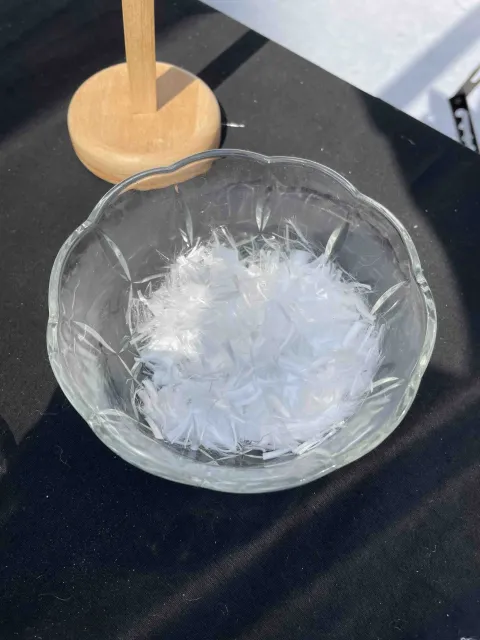
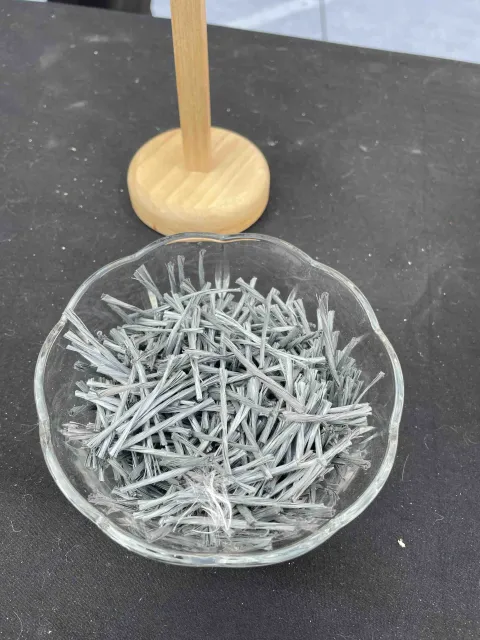
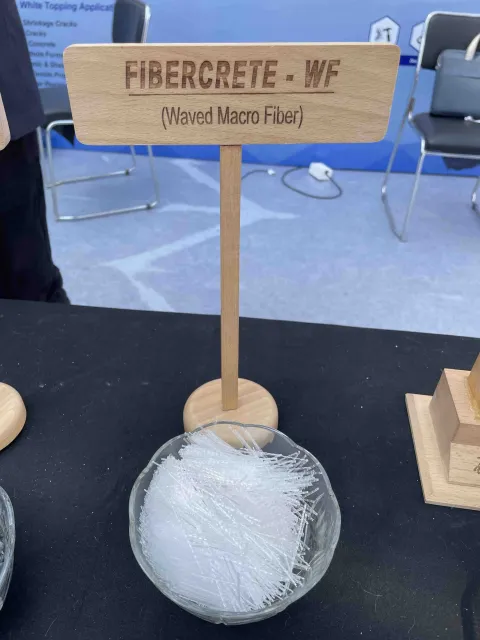
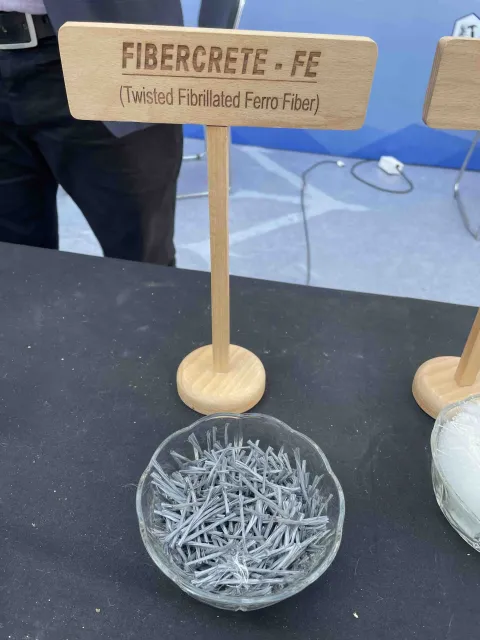
Fibers added to cement improve its mechanical strength, limit cracking, increase durability and can offer specific properties such as thermal insulation or fire resistance, depending on their nature. More about fibers below.
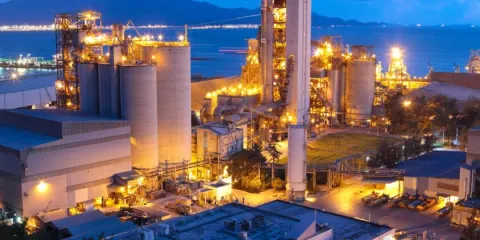
With our extensive production capacity, efficient logistics and commitment to reliability, we guarantee timely shipments and tailored solutions to meet the specific requirements of infrastructure, government and mega-scale developments across the globe.
What You Should Know About Concrete
What is Concrete?
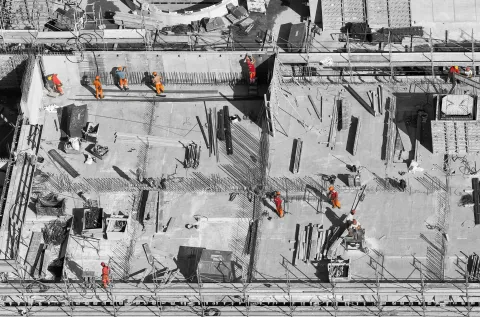
Concrete is a mixture of cement, sand or fine aggregates, coarse aggregates, water and admixtures. Cement, sand and coarse aggregates are the major raw materials for concrete, and they need to be precisely proportioned to produce a mixture that is strong and long-lasting. The proportions of each component vary depending on the type of concrete being made, and the components react differently with each other based on this ratio. Workability, strength, durability, creep and shrinkage are the prime properties of concrete. Let’s explore the main types of concrete used in construction.
Different Types of Concrete Used in Construction
Normal Strength Concrete
Normal-strength concrete is made by combining the four basic materials: cement, sand, coarse aggregate and water. Its strength ranges from 10 MPa to 40 MPa, depending on the characteristics of the cement used and the local weather conditions at the construction site, and its initial setting time is 30 to 90 minutes.
Plain Concrete
A basic concrete mix called plain cement concrete, or PCC, consists of cement, water, fine and coarse aggregates, and optional admixtures. PCC has excellent compression strength. However, it is extremely weak in tension because it lacks steel or other reinforcements. PCC mixes are typically designed with a 1:2:4 or 1:3:6 ratio. It is frequently used in the foundations of buildings.
Reinforced Concrete
Reinforced concrete, also called reinforced cement concrete, is created using reinforcing bars (rebar) to increase the tensile strength of the concrete. The overall durability of the concrete is increased when its compressive strength and the tensile strength of the reinforcement are combined. It is most suitable for large-scale construction projects requiring high tensile strength, such as tall buildings, bridges, dams or any other structure that must support very heavy loads.
Glass Concrete
Glass concrete is one of the special types of concrete in civil engineering. When recycled glass is added to the concrete as an aggregate or, depending on the desired result, substituted for both fine and coarse aggregates, the mixture is referred to as glass concrete. Glass aggregates can range in size from a fine talc-like powder to gravel-sized pieces and six-inch glass rocks, and they are almost always made from recycled glass. Depending on the desired appearance, glass can either be used in chunks or crushed using a glass crushing machine. Glass concrete is a visually appealing and highly polished material for countertops, floors and tiles because it usually has a shiny or “glowing” appearance.
Air-Entrained Concrete
Air-entrained concrete contains tiny air bubbles that help release internal pressure. During mixing, an air-entraining agent is added, which lowers the surface tension and creates air pockets in the slurry. This type of concrete is appropriate where water builds up under freeze-thaw conditions, with temperatures swinging from below to above freezing. Over time, the structure lasts longer because the tiny pockets give water room to expand, preventing the concrete from cracking and resisting scaling. Microscopic air bubbles make up 5% to 7% of the concrete mix. Because adding air reduces the density of the concrete, more cement is used to compensate for the strength.
Fiber-Reinforced Concrete
A composite material consisting of cement, water, aggregates and rounded or flat fibers is called fiber-reinforced concrete. Many fiber types, including carbon, asbestos, glass, steel, polypropylene and organic fibers, are widely used to reduce permeability, bleeding and the development of small cracks. Fiber-reinforced concrete is widely used in the construction of dams, roads, bridges, runways, walls, aircraft parking areas and pavements.
Lightweight Concrete
As the name suggests, lightweight concrete has a lower density, and it is used to decrease the self-weight of a structure. Lightweight aggregates such as silica sand, pumice, sawdust, scoria and volcanic cinders are used to make it. Any concrete with a density below 1,920 kg/m³ is considered lightweight, as the aggregates selected ultimately determine the density of the finished product. Lightweight concrete is used for walls, flooring and places where the overall “dead weight” of a building must be reduced.
Ready-Mix Concrete
Ready-mix concrete is produced in a manufacturing plant and transported to the building site in a truck equipped with a mixer. To ensure that it is ready to pour at the job site without hardening beforehand, it typically contains admixtures.
Polymer Concrete
Polymer concrete is made by replacing the lime and shale-based Portland cement with a polymer binder that cures and hardens. Examples of polymer binders include polyester, epoxy mixtures, vinyl ester, acrylics and many other polymer resins. The type of resin determines the purpose of the polymer concrete: epoxy binders help reduce shrinkage during curing, while acrylic binders provide weather resistance and faster setting times. Because polymer binders are more adhesive than cement, they create a mix with a higher tensile strength than one made only of Portland cement. Because polymer concrete resists corrosion well, it is frequently used in sewer systems, swimming pools and other structures in direct contact with corrosive liquids and chemicals.
Pervious Concrete
Pervious concrete is a porous concrete that allows water to seep through to the groundwater below. It is used to build pavements and roads, can absorb water at a rate of up to five gallons per minute and is designed to deal with stormwater accumulation. With little to no fine aggregates, it leaves more space for air and water to flow through, so stormwater can filter through the concrete and seep into the ground.
Self-Compacting Concrete
Self-compacting concrete, also known as self-consolidating concrete, is one of the special types of concrete in civil engineering. It has three special characteristics:
- A high filling ability that allows it to flow easily in all directions around confined spaces and obstacles such as steel reinforcement when it is poured.
- A high passing ability that allows it to pass around these obstacles.
- Segregation resistance, or the ability to maintain its original state during transportation, placement and after placement.
With less labour and a faster placement time, these characteristics allow the concrete to fill the mould very closely without additional support or vibration. Self-compacting concrete is more fluid because it contains more fine aggregate, typically sand, and additives such as superplasticizers and viscosity-enhancing admixtures, which make sure the sand particles are evenly distributed. It is made by mixing these additives with the standard ingredients (cement, fine and coarse aggregate, and water) in a concrete mixer.
What You Should Know About Fibers
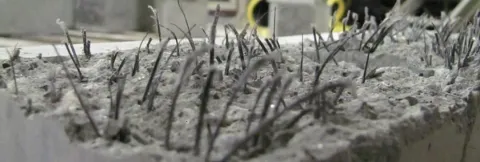
What is Fiber-Reinforced Concrete?
Glass fibers or other fibrous materials, either natural or synthetic, are added to concrete mixtures to create fiber-reinforced concrete. In other words, it is a composition of cement, sand, aggregates, water and discrete, short fibers distributed evenly throughout the material.
Fibers improve the overall energy absorption and structural integrity of concrete and reduce the risk of cracking. However, fibers are weak in flexural strength (the bending capacity of the concrete without breaking), so they are not a substitute for steel reinforcement.
When blending fiber-reinforced concrete, two factors to consider are the fiber size, also known as the aspect ratio (the length of the fiber divided by its diameter), and the water-cement ratio. Since the volume of fibers can affect the strength and durability of the structure, it is also important to consider the percentage of fiber used. Fiber-reinforced concrete should be mixed uniformly without separating the mixture. To prevent fibers from balling together, they must be added before the water is mixed in. This should ideally be done with a laboratory mixer and filtered through a wire mesh basket.
Different Types of Fibers Used in Fiber-Reinforced Concrete
Steel Fibers
Steel fibers are typically added to concrete to increase its strength and its ability to support loads after cracking. They are loose or bundled, formed into various geometries (crimped, hooked-end, or with other mechanical deformations for anchorage in the concrete) and made of carbon or stainless steel.
Glass Fibers
The main applications of glass fiber-reinforced concrete (GFRC) are in architecture and cement-based panel structures. Glass fibers can be used to create lighter, more contemporary and aesthetically pleasing structures, such as architectural cladding for buildings or furniture.
Natural Fibers
All over the world, natural fibers are used in non-commercial applications to strengthen cement-based products. They are made of different natural materials, including sugarcane, coconut, sisal and jute, and they have different lengths, shapes and properties.
Synthetic Fibers
There are two types of synthetic fibers: micro-fibers and macro-fibers. Micro-fibers, often composed of acrylic, polyester, nylon or polypropylene, are used in concrete to minimise shrinkage cracks. In concrete structures where high tensile strength is required, macro-fibers are a more affordable reinforcement option than welded wire. Common structures built with micro-fibers include sidewalks, curbs and driveways; common structures built with macro-fibers include septic tanks and manholes.
In the construction industry, fiber-reinforced concrete is also known by different names according to the type of fiber used, such as steel fiber-reinforced concrete or glass fiber concrete.
Benefits of Fiber-Reinforced Concrete
- It improves the tensile strength of the concrete.
- It improves the durability of the concrete.
- It minimises the water and air voids that contribute to the natural porosity of the gel.
- Fibers are more resistant to creep; the creep performance of rebars is greatly influenced by the orientation and volume of fibers.
- It prevents cracks and increases the static and dynamic properties of the concrete.