

Discover Our Full Range of Bitumen Grades
Bitumen Penetration Grade
Description
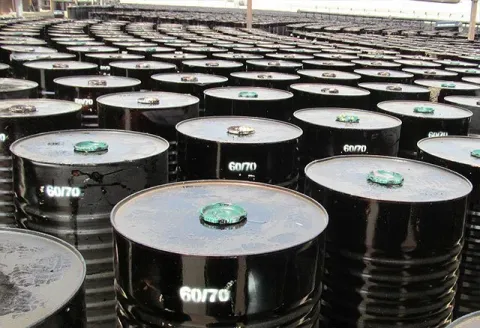
The penetration grade bitumen is refinery bitumen that is manufactured at different viscosities. The penetration test is carried out to characterize the bitumen, based on the hardness. Thus, it has the name penetration bitumen. The penetration bitumen grades range from 15 to 450 for road bitumen. But the most commonly used range is 25 to 200. This is achieved by controlling the distillation process. The partial control of fluxing the residual bitumen with the oils can help in bringing the required hardness.
Range of Grades
- Bitumen 10/20
- Bitumen 20/30
- Bitumen 30/40
- Bitumen 30/45
- Bitumen 35/50
- Bitumen 40/50
- Bitumen 40/60
- Bitumen 50/70
- Bitumen 60/70
- Bitumen 70/100
- Bitumen 80/100
- Bitumen 85/100
- Bitumen 100/150
- Bitumen 120/150
- Bitumen 160/220
- Bitumen 200/300
Cationic Bitumen Emulsion
Description
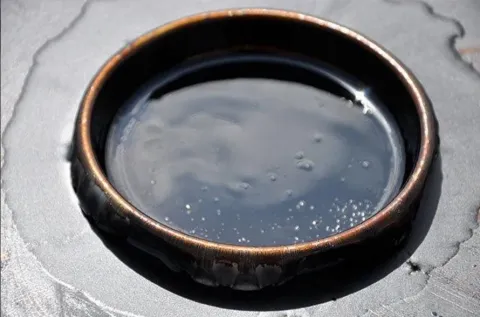
The term anionic bitumen emulsion is derived from the migration of particles of bitumen under an electric field. The droplets migrate toward the anode (positive electrode), and hence the emulsion is called anionic. In an anionic emulsion, there are “billions and billions” of bitumen droplets with the emulsifying agent at the water-bitumen interface. The tail portion of the emulsifying agent aligns itself in the bitumen while the positive portion of the head floats around in the water leaving the rest of the head negatively charged and at the surface of the droplet. This imparts a negative charge to all the droplets. Since negatives repel each other, all the droplets repel each other and remain as distinct bitumen drops in suspension. A typical anionic emulsifying agent is shown below along with a diagram showing the orientation of the agent at the bitumen-water interface and the negative charge imparted to each drop.
Range of Grades
- Cationic Emulsion SS-1
- Cationic Emulsion SS-1h
- Cationic Emulsion CMS-2
- Cationic Emulsion CMS-2h
- Cationic Emulsion CRS-1
- Cationic Emulsion CRS-2
Rapid Curing Cutback Bitumen
Description
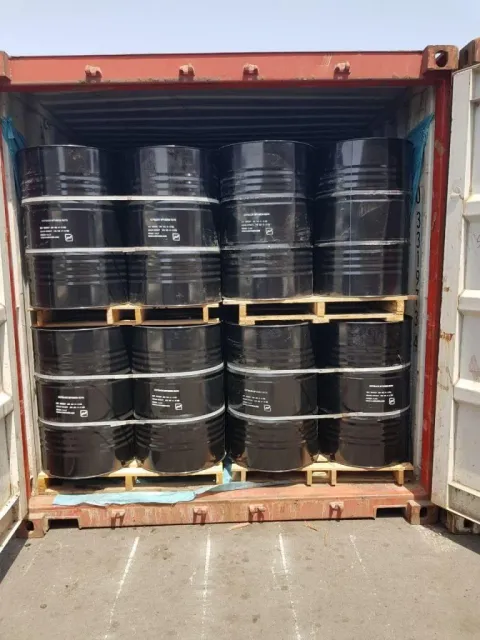
Asphalt cutbacks use petroleum solvents for dissolving asphalt cement. The solvents are variously called distillate, diluents or cutter stock. If the solvent used in making the cutback asphalt is highly volatile, it will quickly escape by evaporation. Solvents of lower volatility evaporate more slowly. On the basis of the relative speed of evaporation, cutback asphalts are divided into three types: rapid curing (RC), medium curing (MC) and slow curing (SC).
Range of Grades
- RC-30
- RC-70
- RC-250
- RC-800
- RC-3000
Oxidized Bitumen
Description
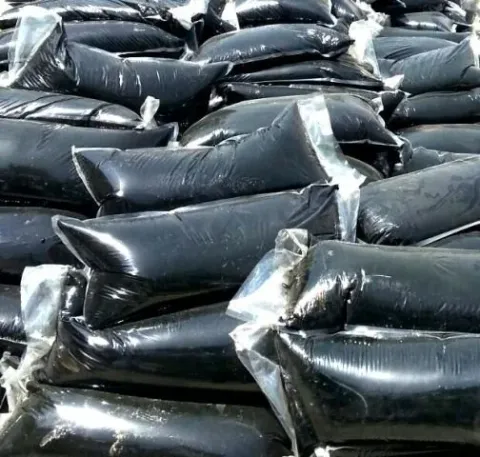
Oxidized bitumen or blown bitumen grades are produced by passing air through the penetration grades. This process gives the bitumen more rubbery properties than its original formula and they are simply harder bitumen. Hard bitumen under controlled temperature conditions is widely used as an anti-slip layer compound in the piling industry, for the manufacture of roofing felts, the roofing and waterproofing industries, for sound dampening felts and undercarriage sealant in the automotive industry, electric cable joint protection, joint filling compound, sealant compound and many others. Also used in sealing saw cuts and joints where expected movements are minimal. It is also used in the manufacturing of bituminous marine mastic for the oil & gas pipeline joints.
Range of Grades
- Oxidized Bitumen 75/25
- Oxidized Bitumen 75/35
- Oxidized Bitumen 85/25
- Oxidized Bitumen 85/30
- Oxidized Bitumen 85/40
- Oxidized Bitumen 90/10
- Oxidized Bitumen 90/15
- Oxidized Bitumen 90/40
- Oxidized Bitumen 95/25
- Oxidized Bitumen 105/15
- Oxidized Bitumen 105/35
- Oxidized Bitumen 115/15
- Oxidized Bitumen 150/5
Anionic Bitumen Emulsion
Description
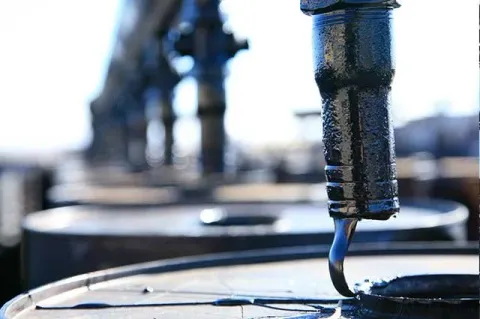
A stable dispersion of bitumen in water in the continuous phase. The bitumen globules are positively charged due to the NH3+ group cover which is formed around bitumen droplets and provide stability for emulsion by electrostatic repulsion. These bitumen droplets have an affinity with the negatively charged aggregate, which is usually available in India. Dispersion is obtained by processing bitumen & water-based solution under controlled conditions through a colloidal mill having a high-speed rotor in the presence of scientifically selected surfactants/emulsifier. Selection of emulsifier & its quality is significant for emulsion stability, its breaking and curing when applied over aggregates. The Cationic Bitumen Emulsion is chocolate brown and free-flowing at normal temperature.
Range of Grades
- Anionic Emulsion SS-1
- Anionic Emulsion SS-1h
- Anionic Emulsion RS-1
- Anionic Emulsion RS-2
- Anionic Emulsion MS-2
- Anionic Emulsion MS-2h
- Anionic Emulsion QS-1h
- Anionic Emulsion HFRS-2
- Anionic Emulsion HFMS-1
- Anionic Emulsion HFMS-2
- Anionic Emulsion HFMS-2h
- Anionic Emulsion HFMS-2s
Medium Curing Cutback Bitumen
Description
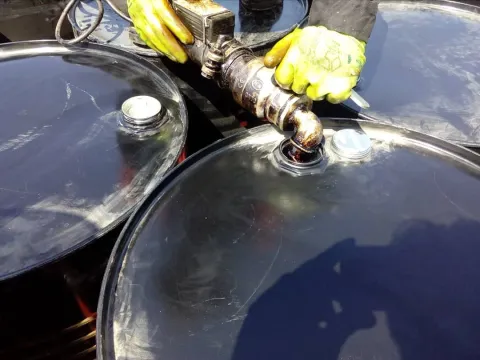
Asphalt cutbacks use petroleum solvents for dissolving asphalt cement. The solvents are variously called distillate, diluents or cutter stock. If the solvent used in making the cutback asphalt is highly volatile, it will quickly escape by evaporation. Solvents of lower volatility evaporate more slowly. On the basis of the relative speed of evaporation, cutback asphalts are divided into three types: rapid curing (RC), medium curing (MC) and slow curing (SC).
Range of Grades
- MC-30
- MC-70
- MC-250
- MC-800
- MC-3000
Bitumen Soft Grade
Description
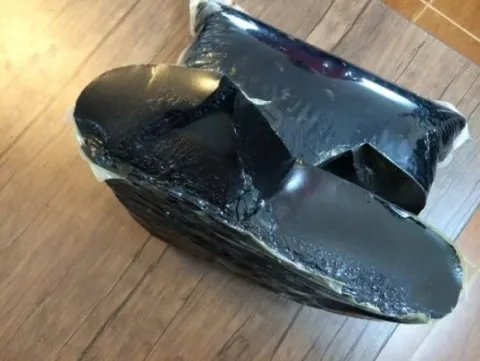
This bitumen is a very soft grade of oxidized asphalt that should be packed in steel drums. It is a flexible bitumen, while its softening point is high. This type of asphalt is useful in road construction to keep the asphalt stable against hot season and movement.
Range of Grades
- Bitumen Nᵒ 10
- Bitumen Nᵒ 30
- Bitumen Nᵒ 40
Coating Bitumen

Description
Bitumen coating compositions having substantially improved application and drying properties and producing coatings of improved properties including resistance to ultraviolet rays and alligatoring resulting therefrom said coating compositions comprising volatile solvent solutions of a bitumen coating material having softening point between 110°F and 250°F. The bitumen coatings are also characteristically non-viscous materials which are not thixotropic and are therefore ordinarily applied as thin films. The bitumen coating compositions may also contain filler materials which tend to settle from the non-thixotropic compositions after storage for only a short time. It has been proposed in the past to add inert colloidal fillers such as silica to obtain thixotropic properties and thicker films on the application of the compositions. However, even such inert fillers tend to affect only solution properties and generally exist in the finished coating as an expensive additive which does not benefit other properties of the coating.
Range of Grades
- Bitumen Roll Sheet
- Bitumen Primer D-41
- Pipe Coating
- Bituseal Coating
- Bitumen Mastic
Slow Curing Cutback Bitumen
Description
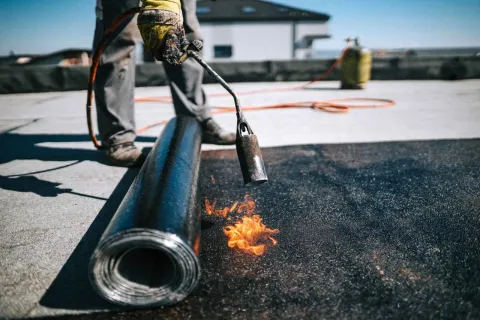
Asphalt cutbacks use petroleum solvents for dissolving asphalt cement. The solvents are variously called distillate, diluents or cutter stock. If the solvent used in making the cutback asphalt is highly volatile, it will quickly escape by evaporation. Solvents of lower volatility evaporate more slowly. On the basis of the relative speed of evaporation, cutback asphalts are divided into three types: rapid curing (RC), medium curing (MC) and slow curing (SC).
Range of Grades
- SC-30
- SC-70
- SC-250
- SC-800
- SC-3000
Everything You Should Know About Bitumen
What Is Bitumen, Really?
Learn the basics of what bitumen is, its origins, characteristics, and why it plays a vital role in construction and industry.
All Types of Bitumen
Get an overview of the different types of bitumen, from penetration grade to oxidized and emulsions, and their specific uses.
Bitumen Application
Explore the wide range of bitumen applications, from road paving to roofing, waterproofing, and industrial sealing.
Process of Production
Uncover how bitumen is produced through refining processes like vacuum distillation, air blowing, and solvent separation.
Standards of the Industry
Explore the international and national standards that define bitumen quality, classification, and usage across various applications.
Bitumen Components
Discover the key chemical constituents of bitumen, including its complex hydrocarbon structure and the role of SARA fractions in performance.
Lab Test Explanation
Understand how laboratory tests are used to evaluate bitumen properties like penetration, softening point, and temperature susceptibility.
Penetration Grade Information
Want to understand what Penetration Grade Bitumen really is and why it matters in road construction? Dive into our full article to explore its definition, uses, and why it’s essential for long-lasting pavements.