
Portland Cement CPA 55 - CEM I 52.5 N is a high-performance pure Portland cement, manufactured from finely ground clinker and a small proportion of gypsum. It is classified as CEM I, meaning it contains no additional mineral components. Designed for applications requiring very high early and final strength, this cement is ideal for structural and industrial concrete.
Pure Portland Cement. Maximum Strength. Premium Performance.
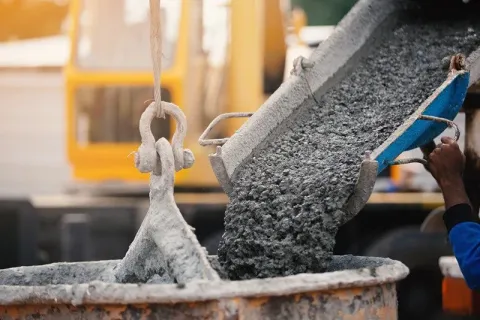
Applications
This premium Portland Cement CPA 55 - CEM I 52.5 N is suitable for a wide range of uses:
- High-strength structural concrete.
- High-rise buildings and bridges.
- Precast concrete elements (beams, slabs, pipes).
- Industrial floors and heavy-load pavements.
- Reinforced concrete exposed to dynamic loads.
Chemical Properties
- Composed primarily of calcium silicates (C₃S, C₂S) for high mechanical strength.
- High content of calcium oxide (CaO) for rapid hydration and setting.
- Low content of magnesium oxide (MgO) and alkalis to improve long-term durability.
- No added mineral components, ensures purity and consistency.
- Complies with EN 197-1 standards for CEM I 52.5 N high-strength cements.
Key Benefits
- Very high early and final strength for faster formwork removal.
- Stable and predictable performance in extreme conditions.
- Superior bonding and long-term durability.
- Minimal shrinkage and cracking.
- Excellent for prestressed and high-performance concrete.
What You Should Know About Fiber-Reinforced Concrete
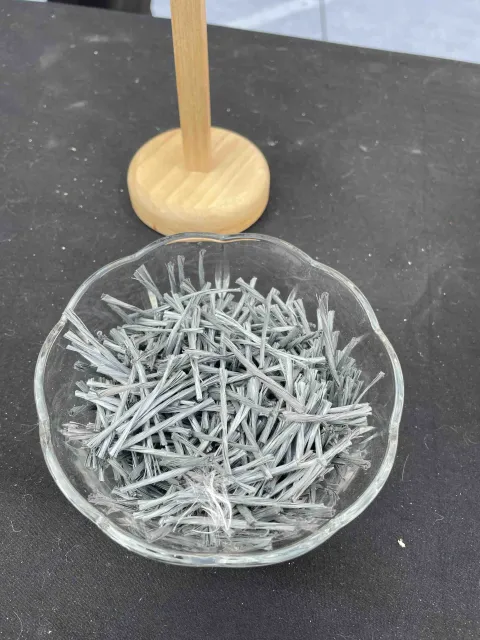
Glass fibers or other fibrous materials, either natural or synthetic, are added to concrete mixtures to create fiber-reinforced concrete. In other words, it is a composition of cement, sand, aggregates, water and discrete, short fibers distributed evenly throughout the material.
Fibers improve the overall energy absorption and structural integrity of concrete and reduce the risk of cracking. However, fibers are weak in flexural strength (the bending capacity of the concrete without breaking), so they are not a substitute for steel reinforcement.
When blending fiber-reinforced concrete, two factors to consider are the fiber size, also known as the aspect ratio (the length of the fiber divided by its diameter), and the water-cement ratio. Since the volume of fibers can affect the strength and durability of the structure, it is also important to consider the percentage of fiber used.
Learn more about fibers · Back to all cements